Vocational Rehabilitation Benefits 2026: Boost Income by 20%
Anúncios
Latest developments on Vocational Rehabilitation Benefits 2026: Accessing Training and Job Placement Services to Boost Your Income by 20%, with key facts, verified sources and what readers need to monitor next in Estados Unidos, presented clearly in Inglês (Estados Unidos) (en-US).
Vocational Rehabilitation Benefits 2026: Accessing Training and Job Placement Services to Boost Your Income by 20% is shaping today’s agenda with new details released by officials and industry sources. This update prioritizes what changed, why it matters and what to watch next, in a straightforward news format.
The program aims to empower individuals with disabilities to achieve economic independence through comprehensive support. Understanding the specific provisions and how to access them is crucial for maximizing potential benefits.
Understanding Vocational Rehabilitation Benefits 2026
The upcoming Vocational Rehabilitation Benefits 2026: Accessing Training and Job Placement Services to Boost Your Income by 20% program represents a significant federal initiative designed to assist individuals with disabilities in securing meaningful employment. This program builds upon existing frameworks, introducing enhancements aimed at improving outcomes and increasing participants’ earning potential.
The primary goal is to provide tailored services, including vocational counseling, education, training, and job placement assistance. These services are meticulously crafted to address the unique challenges faced by individuals seeking to enter or re-enter the workforce, ensuring a more inclusive and productive labor market.
Anúncios
Officials emphasize that the focus for 2026 is not merely on employment, but on sustainable, higher-paying jobs that can genuinely boost an individual’s income by a targeted 20%. This ambitious objective underscores the program’s commitment to tangible economic improvement for its beneficiaries.
Key Changes and Program Enhancements
Several pivotal changes are slated for the 2026 iteration of Vocational Rehabilitation Benefits. These adjustments are a direct response to evolving economic landscapes and feedback from past program cycles, aiming for greater efficiency and impact.
One notable enhancement includes expanded eligibility criteria, which will allow a broader spectrum of individuals with disabilities to access these crucial services. Furthermore, there is a renewed emphasis on technology-driven training and remote work opportunities, reflecting modern employment trends.
The program also introduces more robust funding mechanisms for specialized training programs and assistive technologies. These resources are critical for equipping participants with the skills and tools necessary to thrive in competitive job markets and achieve the 20% income boost.
- Expanded eligibility for a wider range of disabilities.
- Increased focus on high-demand, tech-oriented training.
- Enhanced funding for assistive technology and adaptive tools.
- Streamlined application and service delivery processes.
Eligibility Criteria and Application Process
Accessing Vocational Rehabilitation Benefits 2026: Accessing Training and Job Placement Services to Boost Your Income by 20% requires meeting specific eligibility criteria, which primarily center around having a disability that presents a substantial barrier to employment. The process is designed to be comprehensive yet accessible, ensuring that those most in need receive support.
Applicants will typically undergo an assessment to determine their vocational aptitudes, interests, and the nature of their disability. This individualized approach ensures that the services provided are perfectly aligned with the participant’s needs and career aspirations.
The application process generally begins with contacting a state Vocational Rehabilitation agency, where counselors guide individuals through the necessary paperwork and evaluations. Early engagement with these agencies is highly recommended to understand specific state-level requirements and timelines.
Anúncios
Who Qualifies for Vocational Rehabilitation Benefits 2026?
To qualify for Vocational Rehabilitation Benefits 2026: Accessing Training and Job Placement Services to Boost Your Income by 20%, an individual must have a physical or mental impairment that constitutes a substantial impediment to employment. This impairment must affect their ability to prepare for, obtain, retain, or advance in gainful employment.
Furthermore, there must be a reasonable expectation that vocational rehabilitation services can help the individual achieve employment outcomes. This determination is made through a thorough assessment by a qualified vocational rehabilitation counselor, focusing on the individual’s potential for success.
While specific criteria can vary slightly by state, the overarching federal guidelines ensure a consistent standard. Veterans with service-connected disabilities often have specific programs and expedited access through the Department of Veterans Affairs, which collaborates closely with state VR agencies.
- Individuals with a diagnosed physical or mental impairment.
- The impairment must create a barrier to employment.
- A reasonable expectation of achieving employment through VR services.
- U.S. citizenship or legal residency status.
Training and Skill Development Opportunities
The core of Vocational Rehabilitation Benefits 2026: Accessing Training and Job Placement Services to Boost Your Income by 20% lies in its robust offerings for training and skill development. These opportunities are critical for equipping participants with the competencies demanded by today’s job market, directly contributing to the goal of a 20% income boost.
Programs range from basic literacy and numeracy to advanced technical certifications and college-level courses. The selection of training is highly individualized, based on the participant’s assessment results, career goals, and local labor market needs, ensuring relevance and employability.
Particular emphasis is placed on emerging industries and occupations that offer competitive wages and career progression. This strategic focus ensures that participants are not just placed in jobs, but in careers with significant growth potential.
Innovative Training Pathways for 2026
For 2026, the program is set to integrate more innovative training pathways, including apprenticeships, internships, and on-the-job training programs. These experiential learning models provide practical skills and direct industry exposure, which are invaluable for securing stable employment.
There is also a strong push towards digital literacy and specialized IT training, recognizing the increasing demand for tech-savvy professionals across all sectors. Partnerships with technology companies and educational institutions are being forged to deliver cutting-edge curricula.
Furthermore, the program supports soft skills development, such as communication, teamwork, and problem-solving, which are universally valued by employers. This holistic approach prepares individuals not just for a job, but for a successful career trajectory.
Effective Job Placement Services
Beyond training, the Vocational Rehabilitation Benefits 2026: Accessing Training and Job Placement Services to Boost Your Income by 20% program provides extensive job placement services. These services are designed to bridge the gap between skill acquisition and successful employment, offering crucial support throughout the job search.
Job placement specialists work closely with participants, assisting with resume writing, interview preparation, and job search strategies. They also leverage a network of employer contacts to identify suitable job openings and facilitate direct connections.
The goal is to ensure that participants not only find employment but secure jobs that align with their skills, interests, and the program’s objective of boosting income by 20%. Follow-up support is also provided to ensure job retention and career advancement.
Connecting Talent with Opportunity
Job placement efforts under Vocational Rehabilitation Benefits 2026: Accessing Training and Job Placement Services to Boost Your Income by 20% involve a proactive approach to employer engagement. VR agencies actively collaborate with businesses to promote inclusive hiring practices and showcase the value that individuals with disabilities bring to the workforce.
Specialized job fairs, employer incentives, and disability awareness training for employers are all part of the strategy to create more welcoming and accessible workplaces. This comprehensive approach benefits both job seekers and employers.
The program also emphasizes matching individuals with jobs that offer competitive wages and benefits, moving beyond entry-level positions to focus on long-term career growth. This strategic matching is key to achieving the targeted income increase for beneficiaries.
- Personalized resume and interview coaching.
- Access to exclusive job listings and employer networks.
- Negotiation support for competitive salaries and benefits.
- Post-placement follow-up to ensure job satisfaction and retention.

Measuring the 20% Income Boost Target
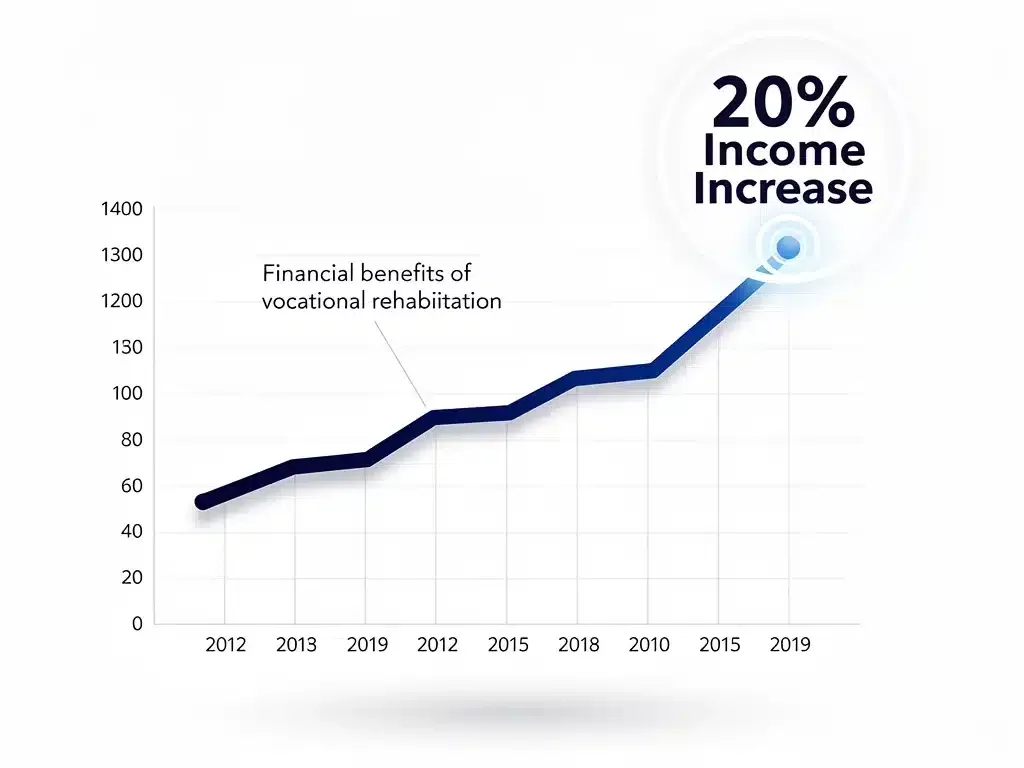
A central tenet of Vocational Rehabilitation Benefits 2026: Accessing Training and Job Placement Services to Boost Your Income by 20% is the explicit target of increasing participants’ income by 20%. This ambitious goal signifies a commitment to measurable economic improvement and provides a clear benchmark for program success.
Measuring this income boost involves tracking participants’ earnings before and after receiving VR services. Data collection will be rigorous, utilizing wage records and self-reported income to provide an accurate picture of financial progress.
This focus on quantifiable outcomes ensures accountability and allows for continuous program refinement. It also provides compelling evidence of the program’s effectiveness in fostering economic independence for individuals with disabilities.
Strategies to Achieve and Track Income Growth
To achieve the 20% income boost, the program strategically prioritizes training for high-demand occupations with competitive wages. This includes sectors like healthcare, information technology, and advanced manufacturing, where skilled workers command higher salaries.
Counselors also provide guidance on career progression, encouraging participants to pursue certifications and further education that can lead to promotions and higher earning potential. The aim is to create sustainable career paths, not just immediate employment.
Ongoing monitoring and evaluation will be crucial for tracking the income trajectories of participants. This data will inform future policy decisions and ensure that the program remains responsive to the needs of its beneficiaries and the demands of the labor market.
Funding and Resources for 2026
The successful implementation of Vocational Rehabilitation Benefits 2026: Accessing Training and Job Placement Services to Boost Your Income by 20% hinges on robust funding and the strategic allocation of resources. Federal and state governments are committing significant investments to ensure the program’s expansive reach and effectiveness.
These funds cover a wide array of services, including vocational assessments, counseling, training costs, adaptive equipment, and job placement support. The goal is to eliminate financial barriers that might prevent individuals with disabilities from accessing necessary rehabilitation services.
Additional resources are being channeled into research and development to identify best practices and innovative approaches in vocational rehabilitation. This ensures that the program remains at the forefront of effective disability employment strategies.
Investment in a More Inclusive Workforce
The investment in Vocational Rehabilitation Benefits 2026: Accessing Training and Job Placement Services to Boost Your Income by 20% is seen as an investment in a more inclusive and productive national workforce. By empowering individuals with disabilities, the program contributes to economic growth and reduces reliance on public assistance.
Partnerships with private organizations, non-profits, and educational institutions are also crucial for leveraging additional resources and expertise. These collaborations enhance the scope and quality of services available to participants.
The funding model emphasizes accountability, with performance metrics tied to employment outcomes and income gains. This ensures that resources are utilized efficiently and effectively to achieve the program’s ambitious objectives.
Success Stories and Future Outlook
The impact of vocational rehabilitation programs is best illustrated through the success stories of individuals who have transformed their lives. These narratives serve as powerful testaments to the potential of Vocational Rehabilitation Benefits 2026: Accessing Training and Job Placement Services to Boost Your Income by 20%.
Many participants, facing significant barriers, have gone on to secure fulfilling careers, achieve financial independence, and become active contributors to their communities. Their journeys highlight the profound difference that targeted support can make.
Looking ahead, the outlook for Vocational Rehabilitation Benefits 2026: Accessing Training and Job Placement Services to Boost Your Income by 20% is optimistic. Continued innovation, strategic partnerships, and a data-driven approach are expected to further enhance the program’s reach and impact.
Anticipated Impact on the Workforce
The anticipated impact of Vocational Rehabilitation Benefits 2026: Accessing Training and Job Placement Services to Boost Your Income by 20% on the American workforce is substantial. By fostering a larger pool of skilled and empowered workers, the program will address labor shortages in key sectors and drive economic growth.
Moreover, it will contribute to a more diverse and inclusive workforce, bringing unique perspectives and talents to various industries. This diversity is increasingly recognized as a key driver of innovation and competitive advantage for businesses.
The program’s success will not only benefit individuals with disabilities but also society as a whole, creating a more equitable and prosperous future. The focus on a 20% income boost signals a new era of economic empowerment.
| Key Aspect | Description |
|---|---|
| Program Goal | Enable individuals with disabilities to achieve a 20% income boost through employment. |
| Services Provided | Training, counseling, education, and job placement assistance. |
| Eligibility | Individuals with disabilities hindering employment, with potential for VR services. |
| Key Enhancement | Expanded eligibility and focus on high-demand, tech-oriented training. |
Frequently Asked Questions About Vocational Rehabilitation Benefits 2026
What are the primary objectives of Vocational Rehabilitation Benefits 2026?▼The main goals of Vocational Rehabilitation Benefits 2026: Accessing Training and Job Placement Services to Boost Your Income by 20% are to assist individuals with disabilities in securing stable employment and significantly increasing their income. The program focuses on providing comprehensive support to overcome employment barriers and foster economic independence.
How can I apply for Vocational Rehabilitation Benefits in 2026?▼To apply, individuals should contact their state Vocational Rehabilitation agency. The process typically involves an initial interview, an assessment of disability and vocational potential, and the development of an individualized plan for employment. It’s advisable to start early to understand specific state requirements.
What types of training are offered under these benefits?▼The program offers a wide range of training, including vocational counseling, academic education, technical skills training, and on-the-job training. Focus areas for 2026 include high-demand sectors like IT and healthcare, aiming to equip participants with skills leading to a 20% income boost.
How is the 20% income boost measured and achieved?▼The 20% income boost is measured by comparing participants’ earnings before and after receiving VR services. It’s achieved through strategic job placement in competitive wage occupations, career counseling, and support for continuous skill development and career progression.
What support is available for job placement and retention?▼Job placement services include resume building, interview preparation, job search assistance, and employer networking. Post-placement support ensures job retention and opportunities for career advancement, crucial for sustaining the income boost facilitated by Vocational Rehabilitation Benefits 2026: Accessing Training and Job Placement Services to Boost Your Income by 20%.
Looking Ahead
The unveiling of Vocational Rehabilitation Benefits 2026: Accessing Training and Job Placement Services to Boost Your Income by 20% marks a pivotal moment for disability employment in the United States. This program’s emphasis on tangible income growth and comprehensive support signals a proactive approach to economic inclusion. Stakeholders will closely monitor its implementation and the real-world impact on beneficiaries’ lives, especially regarding the ambitious 20% income boost target. The program sets a new standard for vocational rehabilitation, promising a more equitable future for individuals with disabilities.